If you order a ₹300 filter coffee on an app right now, you can watch a tiny digital bicycle move across a map in real-time. You know exactly when the beans are ground, when the rider picks them up, and the precise minute it hits your doorstep.
Yet, if you donate ₹30,000 to help educate unprivileged children, that money often vanishes into a conversational black hole. Months later, you might receive a generic PDF newsletter featuring a stock photo of smiling children.
Why does a low-stakes caffeine fix come with world-class logistics tracking while our highest-stakes human intentions are left running on dial-up systems?
India is currently operating at an absolute 5G speed. We have engineered the world’s most sophisticated public digital infrastructure with UPI.
We are scaling highways, launching rockets, and automating supply chains at a pace that is baffling the West.
But when it comes to social impact, we are still largely relying on a 2G framework built on "send and hope."
It’s time to change the infrastructure of giving. It is time to turn philanthropy into a verified logistics mission.

The Sincerity Trap: Why Intent Without Infrastructure Fails
For decades, the social sector has run on sentimentality rather than systems. Non-profits frequently pitch a "cause" by leaning heavily into emotional narratives. They show us the hardship, pull at our heartstrings, and ask us to back their good intentions.
But good intentions do not build classrooms. Processes do.
When corporate leaders allocate CSR budgets or young professionals set aside a portion of their hard-earned salaries, they aren't looking for an emotional high; they are looking for a structural solution. They want to know that their capital is actively addressing a specific on-the-ground asymmetry.
The traditional charitable model often fails not because of a lack of honesty, but because of a lack of precision. Raw cash is highly liquid and notoriously difficult to track across multiple layers of administration. When funds are distributed through complex bureaucratic pipelines, leakage becomes an operational risk, not just a moral one.
This creates a systemic trust deficit. Millions of Indians want to give, but they pull back because they cannot see the line connecting their rupee to a reality.
The Shift to Hard Data: Why Environment Outweighs Intention
To fix education, we have to look at the classroom not as a theatre of pity, but as a high-performance cognitive environment. If the physical infrastructure of a classroom is broken, learning stops, no matter how good the teacher is.
When we treat giving like a logistics upgrade, we start tracking the physical assets that directly unlock human potential. The correlation between a child's learning capacity and their physical surroundings is clinical, measurable, and stark.
A landmark study conducted by theInternational Centre for Indoor Environment and Energy alongside researchers at Harvard University, analysed the direct impact of thermal stress on cognitive performance. The data revealed that student cognitive performance and test scores drop by approximately 2% for every degree Celsius that the room temperature rises above 25°C.
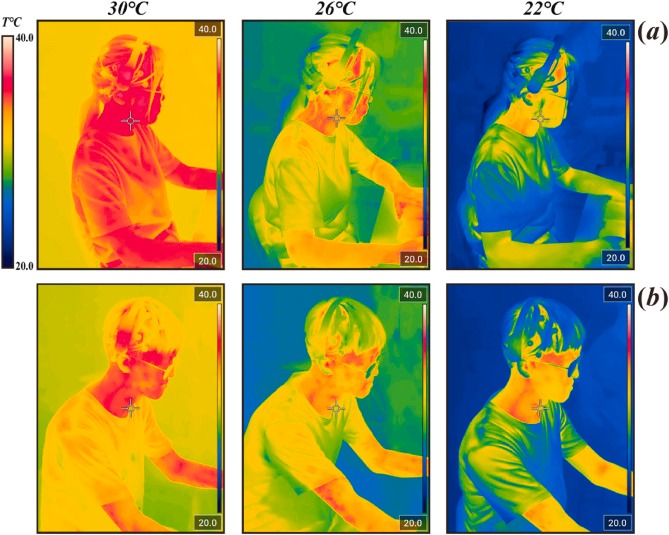
In a heat-soaked remote classroom with a broken or non-existent ceiling fan, a child’s brain is literally prioritising physiological survival over mathematics.
A functioning fan isn't a luxury item or a comfort feature; it is a cognitive stabiliser that extends a child's peak focus window by hours every single day.
Similarly, consider the desk. Sitting cross-legged on a freezing or uneven mud floor for six hours a day forces a developing child's body to expend massive amounts of physical energy just to maintain posture.
Studies inApplied Ergonomics demonstrate that non-standard seating causes up to30% more spinal fatigue compared to basic ergonomic furniture. By delivering a physical desk, we aren't just giving a child furniture; we are running an energy redirection system that takes strain off their spine and places their focus back onto the green board.
Enter the TrueGiv Engine: Turning Donations into Deliveries
At TrueGiv, we looked at this data and asked a simple question:
What if we took the exact tech stack that drives modern e-commerce and plugged it into remote school infrastructure?
We decided to eliminate raw cash transactions from our donation model.
We don't ask you to fund a vague fund or sponsor an abstract idea. Instead, we run a strict, zero-leakage "In-Kind Only" pipeline.
Teacher Raises Verified Need ➔ Donor Funds Physical Asset ➔ TrueGiv Procures & Ships ➔ Geo-Tagged Photo Proof Delivered
Here is exactly how the TrueGiv logistics process maps out, treating your impact with the precision of a premium delivery service:
- Educator-Led Tracking:
We don't sit in city offices deciding what a village school needs. The demands are raised directly by the teachers and school leaders on the ground who know their students best. If a school needs ten benches, a science kit, or a water filter, that specific asset is logged
- CA-Led Oversight & Integrity:
Founded by Chartered Accountants, our entire operational architecture is built for absolute compliance and rigorous audit trails. Every transaction is mapped to a physical item, eliminating administrative drift and ensuring ironclad transparency for both personal donors and corporate CSR heads.
- Real-Time Fulfilment:
Once a mission is funded on our platform, our supply chain kicks into gear. We procure the exact infrastructure items, desks, fans, boards, sports kits and route them through a verified delivery network directly to the remote school.
- Digital Proof of Impact:
The moment the delivery truck arrives at the gate, the loop closes. You don’t get a generalised thank-you note. You receive a digital receipt complete with a geo-tagged, time-stamped photograph or video of the actual item being utilised by students in that specific classroom.
You can also choose to schedule a video call with the teachers and students you helped.
Moving the Retention Needle
When you optimise the physical assets of a school, the behavioural metrics of the entire student community begin to shift automatically.
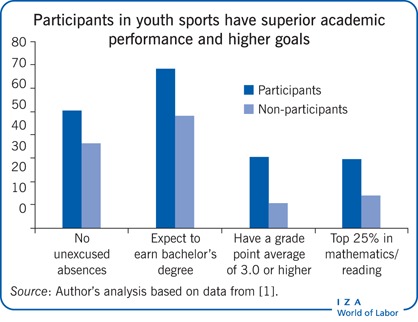
Take sports infrastructure, for example. Many view a football or a cricket kit as an extracurricular "extra." The data tells a completely different story about school consistency and student retention.
Longitudinal research tracking remote school systems by theSportz Village Foundation andLa Trobe University discovered that access to structured physical play and sports kits acts as a powerful "attendance anchor," correlating with a measurable 20% reduction in school dropout risks.
A sports kit creates an unwritten social contract among children. It gives them a tangible, joyful reason to show up every single morning, building the peer bonds and community consistency that keep them enrolled through secondary school.
Whether it is a functioning toilet door that keeps ayoung girl from dropping out of school when biology begins, or a science kit that replaces memorising drawings with tactile experimentation, infrastructure makes education stick.
Build Mode: Activating India 2047
Our generation is highly calculated about where we place our money. We analyse stock charts, invest early in tech startups, optimise our tax portfolios, and demand absolute efficiency from every app we download.
We need to apply that same investor logic to our national foundation.
Reaching a Viksit Bharat by 2047 is not an abstract milestone that will occur by chance. It is an engineering objective. It requires us to systematically upgrade the12 lakh rural classrooms where India's future workforce is currently testing its limits.
When you log onto TrueGiv, you aren't participating in an act of charity. You are activating Build Mode.
You are investing directly in the human capital of India, tracking your assets from our warehouse to a remote desk, and ensuring that the starting line is levelled for every single student in this country.
Stop betting on vague promises. Start tracking the process.
Upgrade a Classroom Today at truegiv.in
Frequently Asked Questions (FAQs)
- How do I know my donation actually reached the intended school?
TrueGiv functions exactly like an e-commerce platform.
Once the physical assets (like desks, fans, or kits) are delivered to the verified remote school, you receive an automated notification.
This includes tracking updates and a final, geo-tagged, time-stamped photograph or video of the items inside the classroom as absolute proof of delivery.
- Does TrueGiv distribute cash directly to the schools or teachers?
No. TrueGiv operates on a strict "In-Kind Only" model. We never distribute raw cash to schools, educators, or administrative bodies. We directly procure the exact physical infrastructure identified by the educators, handle the logistics, and ship the tangible goods straight from our supply network to the school gate to ensure zero financial leakage.
- Who decides what infrastructure items a school receives?
The needs are entirely educator-led. We do not make top-down assumptions about what a community requires. Remote teachers and headmasters pinpoint specific structural gaps, such as a lack of desks, functional blackboards, or sanitation facilities, and log them in our system.
TrueGiv then converts these specific requirements into actionable logistics missions for donors to fund.
- Is TrueGiv compliant with corporate CSR guidelines and tax benefits?
Yes, absolutely. Built and run by a team of Chartered Accountants, our entire pipeline features rigorous audit trails, third-party verification, and strict compliance metrics.
All individual donations qualify for standard tax benefits under Section 80G of the Income Tax Act, and our transparent tracking architecture perfectly aligns with statutory CSR reporting guidelines for corporate donors.

